

Physiotherapy today
The role of physical therapy is changing.
From rehabilitation… to prevention.
Modern physical therapy focuses on strengthening and
shielding the body before injury occurs.
- Primary prevention
- Secondary prevention
- Functional strengthening
Prevention is not a luxury — it’s an investment in yourself.
If you want guidance on this journey, I’m here for you.
Adaptation
In nature, it is not the strongest that survives, but the most adaptable.
The same goes for us.
It’s not enough to be strong. We need a functional and resilient body , capable of responding to whatever life brings.
- Through proper exercise, the body adapts
- Becomes more prepared to endure — without injuries
- Can do more with less effort
If you want to feel more confident about your body
👉 strengthen it, protect it and develop it… I am here to guide you!
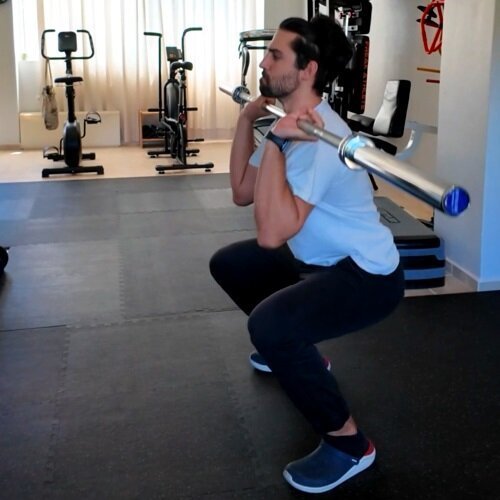
Exercise and pleasure
The benefits of exercise are well-known — and countless.
What really makes the difference?
Enjoyment brings duration. And duration brings results.
- Find an activity that pleases you
- Do it systematically
- Motivate YourSelf
💬 As a guy in my village says: “ Consistency beats intensity. ”
😄 So find what you like — and stay active!.
Correct attitude
What is the correct posture to avoid pain?
The answer is simple but not absolute: it depends.
Our body posture should be varied.
Whatever you do in your work, make sure you don’t stay still for too long ..
- If you sit all day, get up and walk.
- If you move all day, take a break
👉 “The best stop is the next one.”
Small changes, big difference in daily health!
Send me a message and let’s start today..
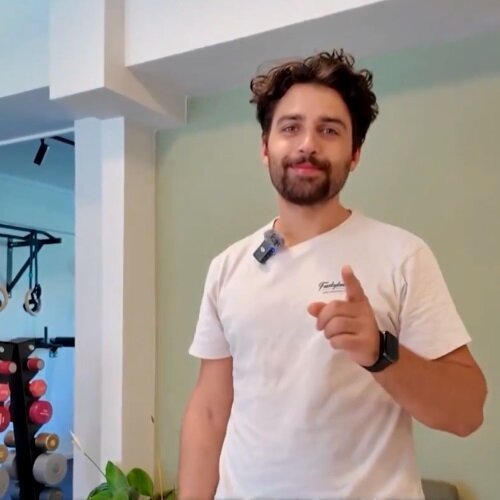
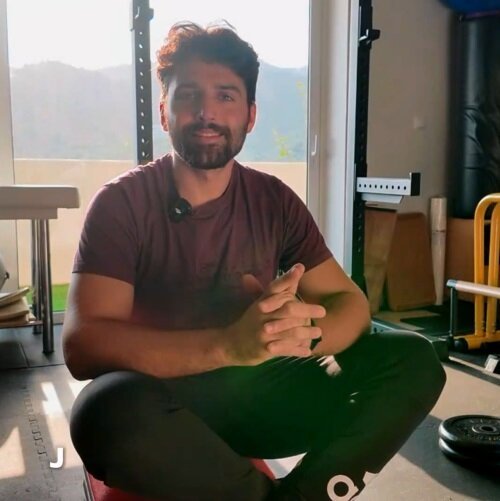
Methods are many but
concepts are few
Is there only one right exercise program?
We often hear: “It worked for me – it will work for you .” But the basic principles of exercise are few and scientifically documented, while the methods… are countless.
Just because a program worked for someone, doesn’t mean it’s for everyone.
Exercise is like climbing a mountain: if you don’t have proper guidance, you can get lost or get injured.
- There are many paths to the top.
- Choose the one that suits you, is safe and enjoyable.
Tolerance vs Endurance
What’s the difference?
In exercise, what really counts is not just your physical strength, but how much you can endure overall — physically and psychologically.
Endurance is theoretical and mainly concerns the body.
However, tolerance includes:
- Endurance
- The experiences
- Beliefs
- The Mood
- Discipline
- Motivation
All of these together determine how far you can go in each workout.
And tolerance is not static: with systematic exercise, you can increase it.
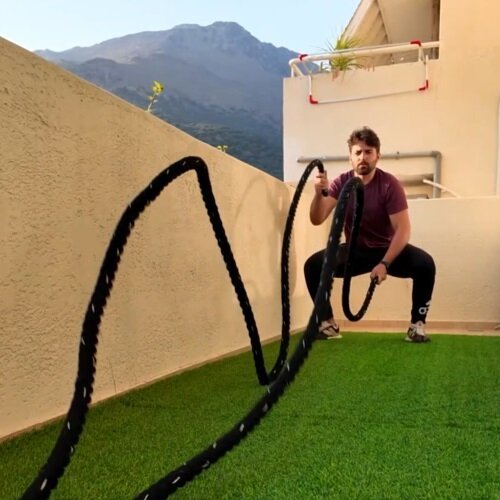
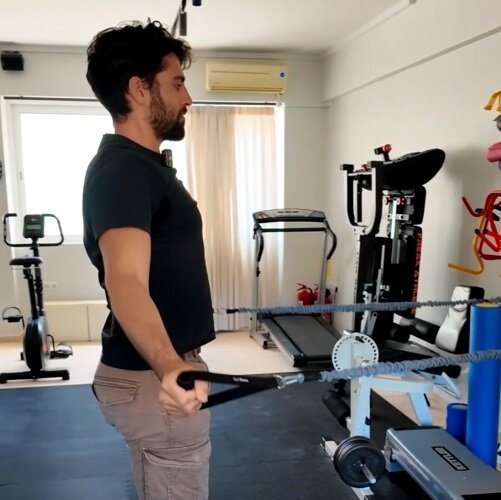
Familiarization with the exercise
Exercise as a stimulus
Exercise is not just a way to get fit. It is a stimulus that helps the body adapt.
- In healthy people: When we reach the limits of our abilities, we become more resilient and reduce the likelihood of experiencing future pain.
- In rehabilitation: When we move at the limits of pain, our brain learns to manage it, without becoming hypersensitive. This way we avoid the vicious cycle of pain - fear - avoidance of movement.
- Properly structured exercise is the key to more strength, less pain and a better quality of life.
Exercise is medicine
Pain Free Living
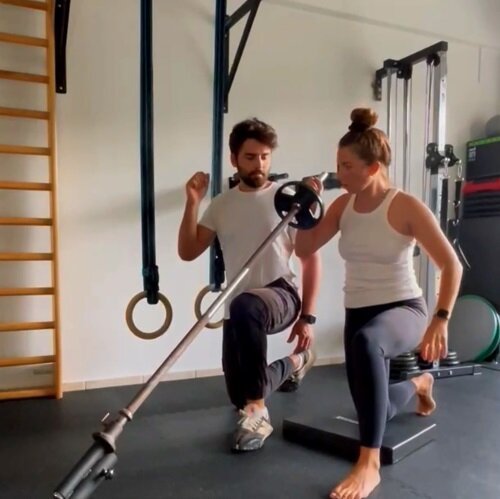
Exercise is not just an activity. It is one of the most powerful “medicines” for the body and mind.
- In rehabilitation: helps reduce pain and restore functionality.
- In healthy people: improves endurance, strength, health and mood.
Just as doctors prescribe medication, physical therapists prescribe exercise.
With the right dosage and individualization, exercise becomes prevention and treatment at the same time.
- Try the most natural medicine: movement!
- If you want to start with guidance, send me a message.
Resilient CNS
Physiotherapy & Central Nervous System
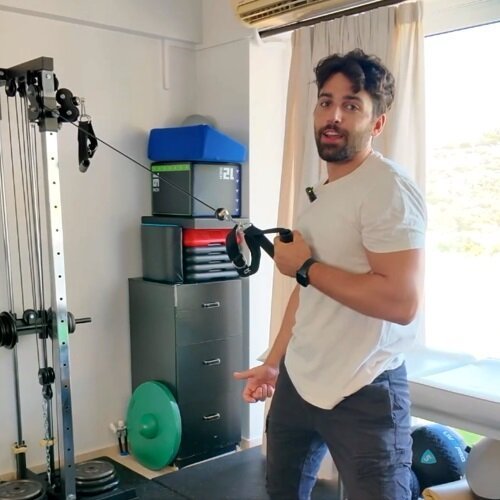
Physical therapy is not just about muscles and joints. Through movement and exercise, the Central Nervous System is influenced and strengthened .
A strong CNS means:
- Resistance to physical stimuli
- Less chance of pain and immobility
- Better quality of life
When we neglect it, we increase the risk of pain and illness.
When we take care of it, we invest in a body that endures longer and lives better.
Movement is life and life is movement
In the beginning was… movement!
Life is movement and movement is life.
- Our chronological age (the years the calendar shows) is not the same as our biological age (how “young” or “old” our body is).
- The more we move and exercise → the more our biological age decreases.
- The longer we stay still → the faster it increases.
- No matter what decade we are in, we have the choice to live with more energy, youth and vitality through movement.
- If you want to make exercise a part of your life safely, send me a message – I'll be happy to help you!
Brain & habits
The brain loves habits!
To conserve energy, our brain operates with routines.
We can cultivate good habits that over time become “autopilot.”
🔹 The first few days require effort.
🔹 But soon the new habit becomes easy, natural.. and we seek it ourselves.
Examples:
- Steady resistance exercise
- Quality sleep at a consistent schedule
- Walking
- Healthy diet
👉 Good habits → positive adjustments for body & mind
👉 Bad habits → negative adaptations
Brain’s Power Capacity
⚡ Strong Nervous System = More Power ⚡
Imagine your body as a house → The greater the power in the electrical network, the more devices can operate together, even the most energy-intensive ones.
The same applies to us:
- A strong nervous system helps us withstand more challenges at once.
- It enables us to cope with greater loads of exercise, pressure and daily demands.
- Through systematic exercise, the "strength" of our nervous system increases, so we can function better at all levels.
Do you want to strengthen your body’s network?,
Send me a message – I’ll be happy to help you!